Please introduce yourself!
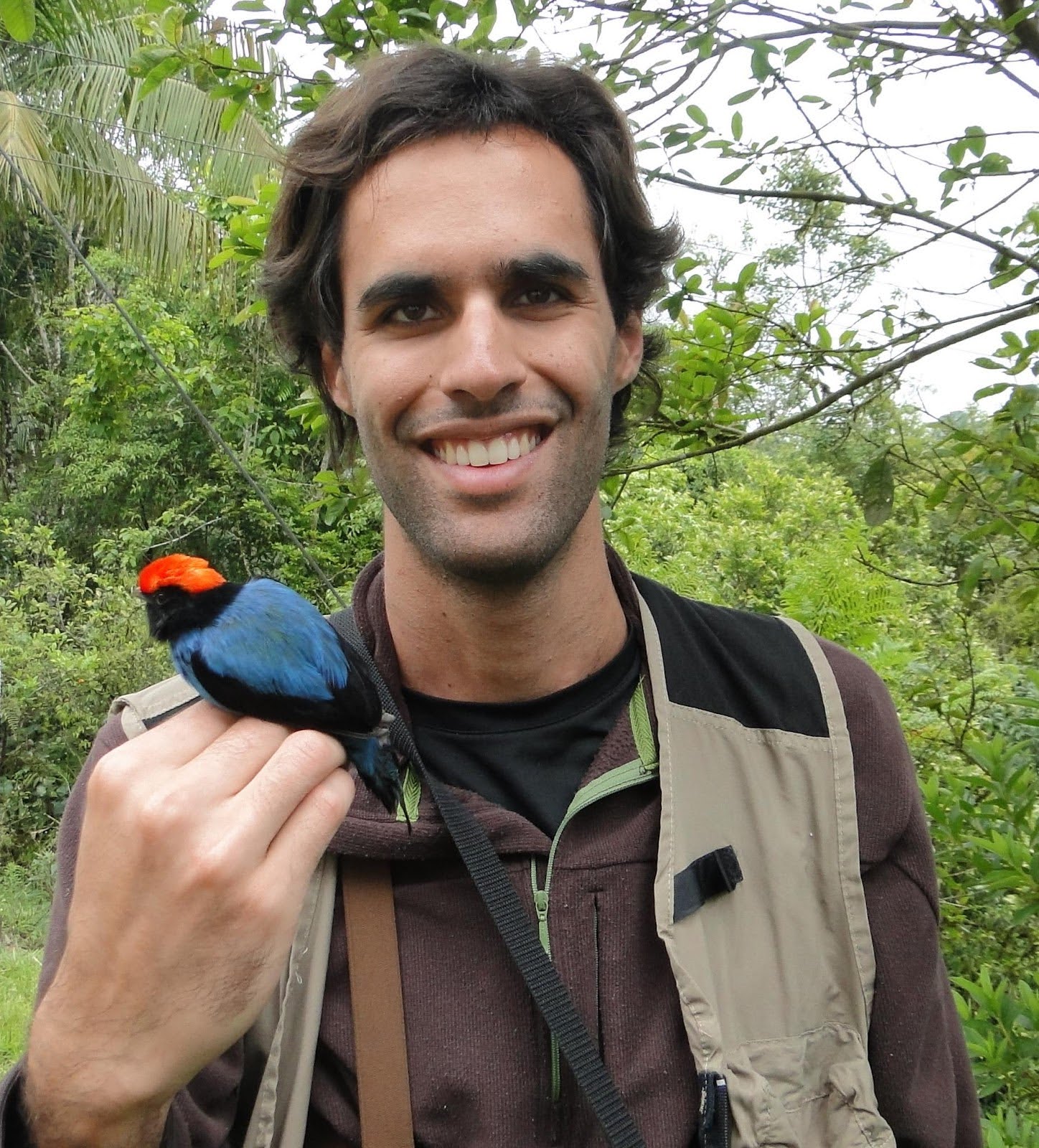
I am from Sao Paulo, Brazil and I received my bachelors and masters degree from University of São Paulo. Ever since my undergrad, I have become more and more interested in the study of birds as my favorite subfield within biology. Specifically, I am interested in the systematics and evolutionary biology of birds. After my masters, I went on to do my PhD at Louisiana State University, which is the world's premier place for the study of South American birds and for the evolution of South American birds.
During my PhD, I specialized in the evolution of bird colors. After my PhD, I was a faculty fellow at Rice University in Houston, Texas for three years. There, I was able to develop my other passion, which is teaching. I was really privileged to be able to develop two new classes at Rice: ornithology, which is the study of birds, of course, and getting a little further out of my comfort zone, entomology, which is the study of insects. Then last summer I arrived at Barnard as a full time lecturer.
Could you expand on your PhD work?
In my PhD, I studied the evolution of bird colors, both across species and within one species. For the comparison between species part, I looked at about 500 species of South American and Central American birds using phylogenetic comparative methods, which are methods that use phylogenies (the “family trees” of how species are related to each other) to make inferences about how they may have evolved. One important result from this part of my research suggested that the amount of light in the area where birds live is very important in defining what colors they have., This has to do with their ability to camouflage. When they live in a dark place, such as in a dense rainforest, their colors tend to be darker. And when they live in a bright place, like in a savanna, their colors tend to be lighter.
The other thing that's really important is climate. Birds tend to be darker when they live in rainy and cool places. There's a lot of reasons for that. Two might be that being darker where it's cool may help them with maintaining their body temperature–like a black car parked under the sun on a hot summer day. As for the rain part, there are a number of bacteria that essentially feed on feathers, and those bacteria thrive in wet places. Melanin, which is the same pigment that gives us our skin and hair color, also gives birds their black, dark, gray, brown colored feathers. Melanin also protects against those bacteria. So it's helpful for birds to have more melanin, which means having darker feathers, in rainier places as a way to defend against these bacteria.
I also did all of basically these same analyses within just one species, which is very appropriately called the Variable antshrike. This species includes birds that are basically all black to also include birds that have pure white belly and breast. They also inhabit various parts of South America and I compared their colors with climate. I found the same things to be true, where the Variable antshrikes living in cooler and rainier places were also darker.
How did you become interested in birds?
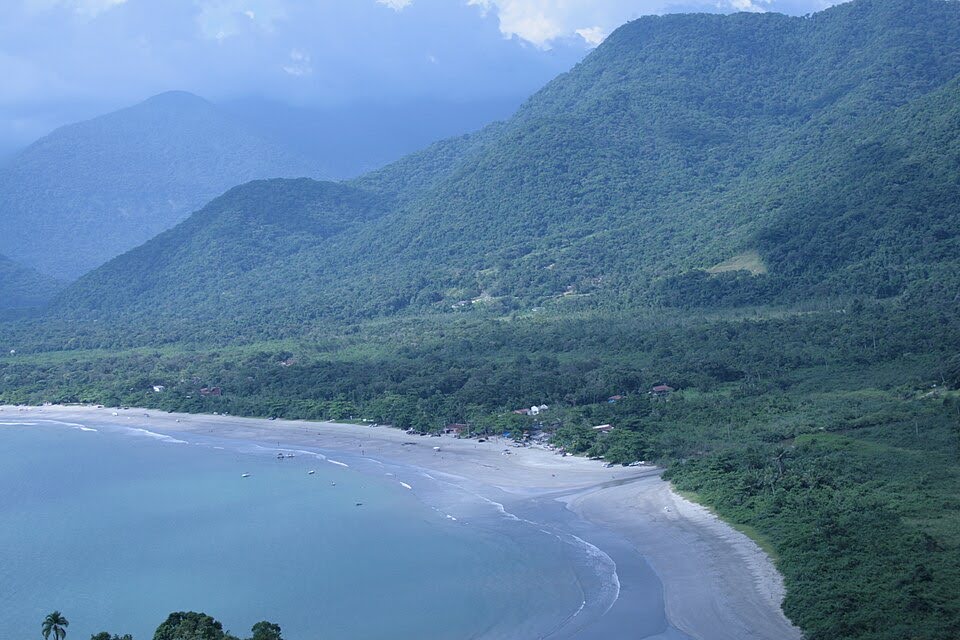
A lot of ornithologists have liked birds since they were very young. My PhD advisor called them “birders from infancy.” I was not a birder from infancy, but I always liked animals and nature in general. I remember my parents always gave me animal sticker albums, and I loved those. Thankfully, I got to spend a lot of time in nature-filled areas while growing up. My parents took us to state parks around Sao Paulo in Brazil, such as in the Atlantic Forest, which has the most beautiful ecosystems.
Due to my love for nature, I decided to pursue biology in undergrad. That is where my love for birds started. I had a group project for one of my ecology-focused biology classes where we had to design a science project about nature on campus. We had a beautiful, nature-filled campus and although Sao Paulo is a huge city, it is full of greenery. My group and I decided to do our project on birds. I think part of it was because there was already a published field guide to the birds of campus, so it made the project much simpler for us. But that decision led me to look at birds with a new eye and I decided birds were really cool. They sing, they're colorful, they are easy to see, they are just so fascinating, and I never looked back.
What is your perspective on undergraduate biology education?
Since I did my undergrad in Brazil, which has a different structure from that in the US, it shapes how I approach biology education. For the Biology major, I had to take an intro class which was all about ecology, and then I had two whole semesters of zoology focused on invertebrates. Then I had a whole semester of vertebrate zoology. I also had two or three semesters about plant biology. So undergraduate biology in Brazil is much, much more about animals, plants and ecology, which of course, had a huge influence in my career.
To this day, I like going out and looking at organisms, at non-human organisms, and I try to impart that into students: the view that biology is so much more than just humans. And there is so much biology everywhere, even right here in New York City. It is a huge urban jungle and many people do not associate the word biodiversity with New York City. But if you go to Central Park or Riverside Park and just pay attention, the important part is to pay attention, you're going to see so much interesting biology going on.
For example, squirrels: there are some black squirrels and there are some gray squirrels, and they're actually the same species. So we can ask questions about how they evolve and why both black and gray squirrels are able to live in Central Park. You can start paying attention to the plants, and you will see all the interactions between the insects and the plants, how insects lay their eggs on the plants and also eat the plants, what defenses the plants have against the insects.
You can just go to Futter Field and if you pay attention to the flower beds, you're going to see so many cool interactions between plants and insects there too. It is almost meditative.
In our age of multiple biodiversity crises, we need students and young people to pay attention, to understand and above all, to appreciate biodiversity. You cannot protect what you don't know. I hope all Barnard graduates will advocate for the protection of biodiversity. When you go to a medical conference and you're talking to other doctors at happy hour, I want my students to be the ones telling everyone about birds.
Even if many of my students go on to be physicians, I would like them to be the one doctor who knows about birds.
What is your favorite bird?
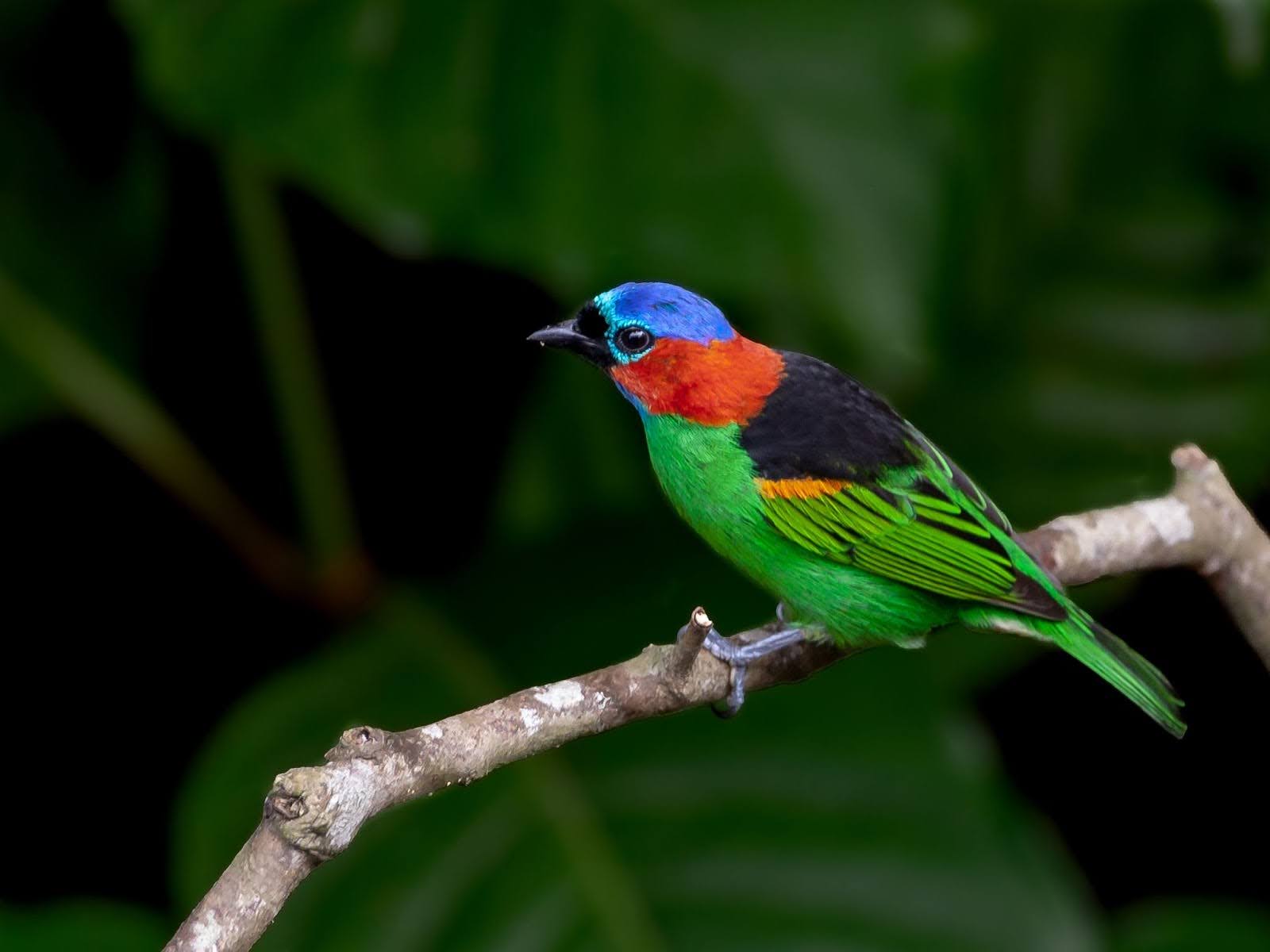
My favorite bird is the Red-necked Tanager. It's my favorite because it is so gorgeous. It is from the Atlantic Forest in Brazil, which is my part of Brazil and hosts my favorite ecosystem. Every December, my family and I spend some time on the coast in Brazil, where the Atlantic Forest meets the ocean. So this lush, beautiful rainforest ecosystem comes almost to the ocean. The rental house we stay at has a bird feeder where we put out food for the birds to eat. And the Red-necked Tanager is one of the birds that comes to eat the fruit the most. So not only is the bird beautiful, it reminds me of a place I really like and that feels like home.
Learn more about Dr. Rafael S. Marcondes:
- Learn more about his research on Google Scholar
- Students can react out at: rafmarcondes@barnard.edu
Image Attributions
Hector Bottai and Marina Almeida, Wikimedia Commons
- FATIMA BAGOM '26